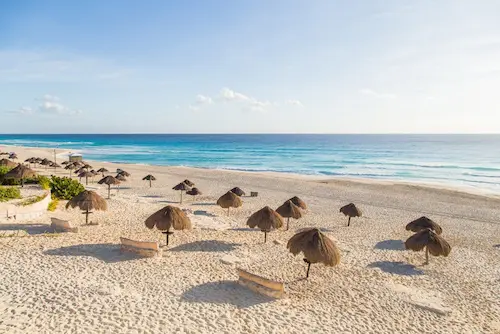
Cancún has warm water and sunshine almost all year, which is exactly why the “best time” question is tricky. The weather is rarely the problem. The real variables are sargassum, hurricanes, crowds and prices, and each of them follows its own calendar.
As a Mexican, Cancún is the place friends from abroad ask me about more than anywhere else. This is the answer I give them: what each month is really like, when the seaweed arrives, which weeks are worth avoiding and how to get good weather without paying peak prices.
If you’re still comparing destinations, start with our guide to the best time to visit Mexico, which covers every region.
The short answer
The best time to visit Cancún is from December to April, the dry season, with sunny days, low humidity and usually little or no sargassum. For the best balance of weather and price, go in late April to May (after Easter) or in November to mid-December. The months to think twice about are June to October, when hurricane season, peak seaweed and the heaviest rain overlap. The cheapest months are usually September and October.
Cancún’s Seasons at a Glance
Cancún doesn’t have a cold season. It has a dry season (roughly December to April) and a rainy season (roughly June to October), with May and November as transition months. On top of that sit four other calendars that matter just as much as the weather: sargassum, hurricanes, wildlife and holiday prices.
Here’s how they line up across the year:
Cancún’s year: weather, seaweed, storms, wildlife and prices
☀️ WeatherDry Dec to Apr · rainy Jun to Oct
🌿 SargassumPossible Apr to Oct · peak Jun to Aug
🌀 Hurricane seasonJun 1 to Nov 30 · highest risk Aug to Oct
💨 Nortes (windy cold fronts)Nov to Feb
🦈 Whale sharksMid-May to mid-Sep · best Jul to Aug
🐢 Sea turtlesNesting May to Sep · hatchlings into Oct
💸 Peak pricesChristmas, spring break, Easter · busy summer holidays
DryTransitionRainyDarker shade = peak of that season
Cancún Month by Month
Temperatures are typical averages and sea temperatures are approximate. Tap any month to open it.
JanuaryBest weather☀️ 28°C / 82°F🌊 Sea 26°C / 79°F
Dry, sunny and comfortable, with the coolest nights of the year (around 20°C / 68°F). After the New Year rush ends in the first days of the month, prices ease off until spring break.
Watch for: nortes, cold fronts that bring a few windy, cloudy days and choppy water. They rarely last long, and they tend to keep seaweed offshore.
FebruaryBest weather☀️ 28°C / 82°F🌊 Sea 26°C / 79°F
One of the most reliable months: dry, sunny and not yet hot. Late January to mid-February is often the sweet spot between the holidays and spring break.
Watch for: the occasional norte early in the month and higher prices around Presidents’ Day weekend.
MarchDriest month☀️ 29°C / 84°F🌊 Sea 26°C / 79°F
Usually the driest month of the year, with calm, clear water. Around the spring equinox (about March 20), crowds gather at Chichén Itzá to see the serpent shadow on El Castillo.
Watch for: US and Canadian spring break fills the Hotel Zone, and in 2027 Easter week (Semana Santa) runs from March 21 to 28, when Mexican families travel too. Expect peak prices.
AprilGreat after Easter☀️ 31°C / 88°F🌊 Sea 26°C / 79°F
Still dry, getting hotter. Once the Easter holidays end in early April, prices drop and the beaches get quieter, which makes the second half of the month one of the best-value windows of the year.
Watch for: the first sargassum arrivals, which can start this month.
MayGood value☀️ 32°C / 90°F🌊 Sea 27°C / 81°F
Hot and mostly dry, with low prices before the summer. Whale shark season officially opens in mid-May.
Watch for: humidity rising and seaweed becoming more likely. Plan Chichén Itzá or Valladolid for early morning, because inland Yucatán is very hot this time of year.
JuneMixed☀️ 32°C / 90°F🌊 Sea 28°C / 82°F
The rainy season starts, usually as short, heavy afternoon showers rather than all-day rain. Hurricane season officially begins on June 1, but early-season storms are less common.
Watch for: June to August is peak sargassum season. The upside is whale sharks and quieter beaches before the July holidays.
JulyMixed☀️ 33°C / 91°F🌊 Sea 28°C / 82°F
Hot, humid and lively. Mexican school holidays start in mid-July, so hotels fill up again and prices rise. Peak month for swimming with whale sharks.
Watch for: heavy seaweed on exposed beaches. Plan island days and pools as backup.
AugustThink twice☀️ 33°C / 91°F🌊 Sea 29°C / 84°F
The warmest sea of the year and still good whale shark odds, but also peak heat, humidity and seaweed, and the start of the riskiest stretch of hurricane season.
Watch for: busy summer-holiday weeks until schools go back in late August.
SeptemberThink twice☀️ 32°C / 90°F🌊 Sea 29°C / 84°F
Usually the rainiest month and the peak of hurricane risk. It’s also the cheapest time of year, with the emptiest beaches.
Watch for: if you go, book flexible rates, buy travel insurance that covers hurricanes and keep an eye on the forecast.
OctoberThink twice☀️ 31°C / 88°F🌊 Sea 28°C / 82°F
Still rainy and still within the riskiest hurricane window. Hurricane Wilma, the worst storm in Cancún’s tourism history, made landfall in October 2005. Seaweed starts to ease as the month goes on.
Watch for: low prices, but the same precautions as September.
NovemberGreat value☀️ 29°C / 84°F🌊 Sea 28°C / 82°F
The rain fades, the sea is still warm and prices haven’t jumped yet. Early to mid-November is one of my favorite times to recommend: dry-season weather at shoulder-season prices.
Watch for: hurricane season technically ends on November 30, and US Thanksgiving week is busier and pricier.
DecemberBest weather☀️ 28°C / 82°F🌊 Sea 27°C / 81°F
Dry season is back: sunny, breezy and comfortable, usually with little seaweed. The first half of the month is excellent value.
Watch for: from about December 18 to January 2, Christmas and New Year bring the highest prices of the year. Book months ahead if you’re traveling then.
The Best Month to Visit Cancún
If I had to pick one month, it would be March for weather and late April or early November for value.
March is usually the driest month, the sea is calm and clear, and seaweed season hasn’t really started. The catch is that everyone knows it: spring break and, in many years, Easter week push prices to their peak.
Late April (after Easter) and the first half of November give you almost the same weather for noticeably less money. If your dates are flexible, those are the windows I’d look at first.
Best time to visit Cancún for…
- Guaranteed beach weather: December to April.
- The lowest prices: September and October, if you accept the rain and hurricane risk.
- Good weather at fair prices: late April to May, and November to mid-December.
- Swimming with whale sharks: July and August (season runs from mid-May to mid-September).
- Chichén Itzá and other ruins: November to March, before the inland heat.
- Snorkeling and diving: March to June, when visibility is usually excellent and the sea is calm. Cozumel is the big diving base nearby; see our adventure travel guide to Mexico.
- Spring break parties: March. Avoiding them: any other month.
Best November to March
Planning a day at Chichén Itzá?
Tours from Cancún handle the 2.5-hour drive and the new visitor center entrance. Pick an early departure to beat the heat and the crowds.
This post contains affiliate links. If you book through them, we may earn a commission at no extra cost to you.
The Worst Time to Visit Cancún
There’s no month when Cancún shuts down, but September and October are the hardest to recommend. They combine the highest hurricane risk, the most rain and lingering seaweed.
That doesn’t mean a trip will be ruined. Most days in hurricane season are hot and sunny with an afternoon shower, and the low prices are real. But if this is a once-in-a-lifetime trip, a honeymoon or a wedding, I’d choose the dry season.
Hurricane Season in Cancún
The Atlantic hurricane season officially runs from June 1 to November 30. In the Mexican Caribbean, the highest risk is usually from August to October.
A direct hit on Cancún is rare in any given year, but storms can still mean cancelled flights, closed beaches and red flags for days. If you travel in these months:
- Book refundable or flexible rates where you can.
- Buy travel insurance that explicitly covers hurricanes, and buy it early (most policies won’t cover a storm that’s already been named).
- Follow the National Hurricane Center in the week before you fly.
- Large resorts in the Hotel Zone have hurricane protocols and shelters; ask yours about them when you check in.
Sargassum Season in Cancún
Sargassum is the brown seaweed that drifts in from the Atlantic and piles up on Caribbean beaches. It isn’t dangerous to swim near in small amounts, but large piles smell as they rot and can make the water murky and brown.
The usual pattern: it can arrive from April, peaks from June to August and fades through October. November to March is historically the clearest period.
What happened in 2026: it was a heavy year. Researchers at the University of South Florida’s Sargassum Watch System, which tracks the seaweed by satellite, expect 2026 to end as the second-largest sargassum year on record, behind only 2025. Seaweed also arrived unusually early, in the first months of the year. By late September, amounts were falling across the Caribbean, with beaching expected to continue but less severely than in summer.
The good news is that seaweed doesn’t hit every beach equally. In Cancún, it depends a lot on which direction the beach faces.
Usually cleaner
Sheltered or facing away from the open sea
- Cancún’s north-facing bay beachesPlaya Langosta, Playa Tortugas, Playa Caracol
- Isla MujeresPlaya Norte, a short boat ride from Cancún
- Cozumel’s west coastThe side facing the mainland
- Hotel pools and cenotesYour backup plan on bad seaweed days
More exposed
Facing the open Caribbean
- The long east-facing stretch of the Hotel ZoneFrom Playa Gaviota Azul and Chac Mool down to Playa Delfines
- Puerto MorelosOften among the most affected in peak months
- Playa del CarmenVaries a lot from week to week
- Tulum and the southern coastUsually the hardest hit
Conditions change daily with wind and currents. Use this as a guide, not a guarantee.
How to check before you go: Quintana Roo publishes a daily sargassum “traffic light” map that rates each monitored beach from no seaweed to excessive, and local news sites share it every few days. Check it in the week before your trip and again the night before a beach day. If you’re booking far ahead, choose a hotel on the bay side of the Hotel Zone or plan a few nights on Isla Mujeres.
Your plan B for seaweed days
Head to Isla Mujeres
When the Hotel Zone gets sargassum, a boat trip to Isla Mujeres usually means calmer water at Playa Norte, plus snorkeling on the way.
This post contains affiliate links. If you book through them, we may earn a commission at no extra cost to you.
Wildlife Seasons in Cancún
Whale sharks
From mid-May to mid-September, whale sharks gather in the plankton-rich waters north of Cancún, around Isla Mujeres, Isla Contoy and Holbox. They’re the largest fish in the world and filter-feed on plankton, so they’re harmless to swimmers. The official 2026 season ran from May 15 to September 17, and July and August usually give the best odds of sightings.
Tours leave early from Cancún, Isla Mujeres and Holbox. Choose an operator that limits the number of swimmers per shark and keeps boats at a distance. Good operators will brief you on the rules before you get in the water.
Mid-May to mid-September only
Swim with whale sharks
Tours leave early from Cancún and sell out in July and August. Book ahead and choose an operator that limits swimmers per shark.
This post contains affiliate links. If you book through them, we may earn a commission at no extra cost to you.
Sea turtles
From May to September, loggerhead and green turtles nest on Quintana Roo’s beaches, including the Hotel Zone, and hatchlings make their way to the sea into October. If you see a nest or hatchlings, keep your distance, don’t use a flashlight or flash, and let hotel staff or local conservation teams know.
The Cheapest Time to Go to Cancún
Hotel and flight prices follow demand more than weather. This is the typical pattern:
How expensive is Cancún each month?
Typical hotel price level, from lowest to peak. Exact rates vary by year and hotel.
LowMidHighPeak
Three ways to pay less:
- Avoid the three peaks: Christmas to New Year (about December 18 to January 2), March (spring break) and Easter week. In 2027, Easter Sunday is March 28.
- Aim for the shoulders: late April to early June, and November to mid-December. You keep most of the good weather and pay noticeably less.
- Stay in downtown Cancún or Puerto Morelos instead of the Hotel Zone, and take day trips to the beaches. Rates are usually much lower.
What About Playa del Carmen, the Riviera Maya and Tulum?
The same calendar applies to the whole Mexican Caribbean coast: Playa del Carmen, Puerto Morelos, Akumal and the rest of the Riviera Maya share Cancún’s dry season, hurricane season and seaweed season. The best time to visit Playa del Carmen and the Riviera Maya is also December to April, with late April and November as the best-value windows.
The main difference is seaweed. Beaches further south tend to receive more sargassum than Cancún’s bay side, so in summer and early autumn Playa del Carmen can be harder hit than the northern Hotel Zone, and Tulum harder still.
Before You Book: A Few Local Tips
- Pay the Visitax on the official site only. Quintana Roo charges foreign visitors a state tourist fee called the Visitax (around 285 pesos, roughly US$15, in 2026). Pay it on the official Visitax website, which ends in .gob.mx. Copycat sites charge several times more. You may also see a small environmental fee per room per night on your hotel bill.
- Check the travel advice. The U.S. State Department’s travel advisory for Mexico rates each state separately; Quintana Roo is currently at Level 2, “Exercise Increased Caution.” Stick to official taxis or reputable transfers, especially at night.
- Check Chichén Itzá before you go. The site closed for almost two weeks in May 2026 during a dispute with local vendors, and since reopening on June 1 all visitors enter through the new visitor center. Confirm it’s open the day before your trip.
- Stay connected from the airport. You’ll want data for transfers, maps and checking the sargassum map. See how Airalo and Ubigi compare, and if you choose Airalo, use our Airalo promo code.
📶 Land in Cancún with data already working
Set up an eSIM at home and skip the airport SIM stands. Handy for your transfer, maps and the daily sargassum map.
Ubigi
Connects to Telcel, Mexico’s largest network, plus Movistar and Altan. The safer pick for cenotes, Holbox and road trips around the peninsula.
Check Ubigi plans →Airalo
Easy setup and lots of plan sizes. New customers save 15% with code NEWTOAIRALO15 (valid until December 31, 2026).
Get Airalo eSIM →This post contains affiliate links. If you book through them, we may earn a commission at no extra cost to you.
First trip to Mexico? Read our tips for first-time visitors before you go.
Frequently Asked Questions
What is the best month to visit Cancún?
March usually has the driest, calmest weather, but it’s also peak season because of spring break and often Easter. For great weather at lower prices, choose late April (after Easter) or early to mid-November.
What is the worst time to visit Cancún?
September and October are the hardest months to recommend. They combine the highest hurricane risk, the most rain and lingering sargassum. They’re also the cheapest months, so they can work for flexible travelers with good travel insurance.
When is sargassum season in Cancún?
Sargassum can arrive from April, usually peaks from June to August and fades through October. November to March is historically the clearest period. Cancún’s north-facing bay beaches, Isla Mujeres and Cozumel’s west coast are usually less affected than beaches facing the open sea.
When is hurricane season in Cancún?
The Atlantic hurricane season runs from June 1 to November 30. In Cancún, the highest risk is usually from August to October. A direct hit is rare in any given year, but storms can disrupt flights and close beaches.
What is the cheapest time to go to Cancún?
September and October are usually the cheapest months. For lower prices with better weather, travel from late April to early June or from November to mid-December, avoiding Thanksgiving week.
Can you swim in Cancún in winter?
Yes. The sea stays around 26°C (79°F) even in January and February, and daytime highs are usually around 28°C (82°F). Occasional cold fronts called nortes can bring a few windy days with rough water and red flags.
When can you swim with whale sharks near Cancún?
The season runs from mid-May to mid-September (May 15 to September 17 in 2026), with the best odds in July and August. Tours leave from Cancún, Isla Mujeres and Holbox.
Final Thoughts
For most travelers, the best time to visit Cancún is December to April, and the smartest time is right at its edges: late April or November, when you get the dry season’s sunshine without peak-season prices.
Whenever you go, check two things the week before you fly: the hurricane forecast if it’s between June and November, and the sargassum map if it’s between April and October. With those covered, Cancún is hard to get wrong.