Oaxaca City Travel Guide: Where to Stay, Eat and Explore
Oaxaca does not try to impress you. It simply is impressive, in a way that unfolds slowly over cobblestone streets, market stalls and centuries old churches. This Oaxaca travel guide focuses on Oaxaca City, the state capital, rather than the wider Oaxaca State (we will talk about it later), and covers everything you need to plan a trip to one of Mexico’s most culturally rich cities, from the best time to visit to where to sleep, eat and wander.
Want to see it all in one day?
Join a guided day trip to Hierve el Agua, Mitla, the Árbol del Tule, a local weaving village and a mezcal distillery, all in one seamless tour.
Book the Oaxaca Day TripQuick Facts
- Best for: food lovers, art lovers, slow travelers
- Ideal trip length: 4 to 5 days
- Best time to visit: October to April
- Nearest major connections: Mexico City (1 hour flight or 6 to 7 hour bus)
Best Time to Visit Oaxaca
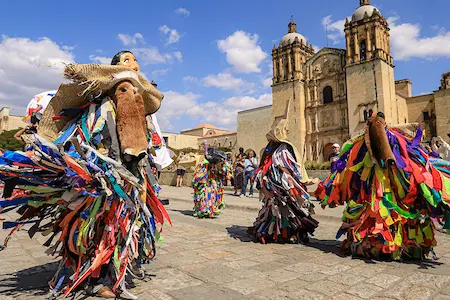
The dry season, from October through April, offers the most comfortable weather for walking the city and visiting nearby ruins. Late October brings the Day of the Dead celebrations, arguably the most powerful time to experience Oaxaca, though hotel prices rise and rooms sell out months in advance. July draws crowds for the Guelaguetza festival, a celebration of Oaxaca’s indigenous cultures through dance and music. If you prefer a quieter visit with the same good weather, aim for November, February or March.
How to Get to Oaxaca
Oaxaca City has its own international airport with a growing number of direct flights, including routes from the United States. Most international travelers still connect through Mexico City, then take a short domestic flight or a comfortable overnight or daytime bus with an operator like ADO. The bus ride takes about 6 to 7 hours and is a reliable, scenic option if you have the time.
Where to Stay in Oaxaca
Skip the generic hotel chains. Oaxaca’s real strength is its collection of small, design forward properties tucked into colonial buildings across the historic center.
- Quinta Real Oaxaca: a former 16th century convent turned hotel, ideal if you want architecture as part of the experience
- Pug Seal Oaxaca: Art Deco design inspired by Zapotec and Mediterranean influences, a few blocks from the Zócalo
- Casa Antonieta: an intimate nine room property with a strong sense of place
- Grana B&B: a restored 16th century building steps from Templo de Santo Domingo, run by three Mexican friends with genuine local knowledge
Book a room in or near the historic center. Walkability is one of Oaxaca’s biggest draws, and everything worth seeing sits within a 20 minute walk of the Zócalo.
Top Things to Do in Oaxaca City
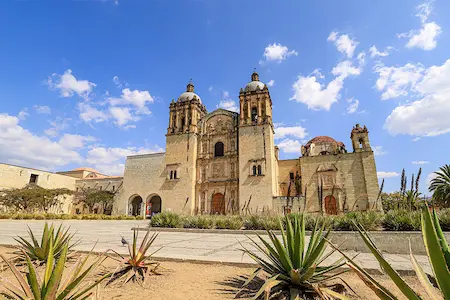
Wander Santo Domingo and its markets. The Templo de Santo Domingo de Guzmán anchors the northern end of the historic center, and the streets around it hold the city’s best galleries, mezcalerías and textile shops.
Visit Monte Albán. This UNESCO World Heritage archaeological site sits on a flattened mountaintop just outside the city and was once the capital of the Zapotec civilization. Go with a local guide to understand what you are actually looking at, since the ruins offer little context on their own.
Take a mezcal tasting. Oaxaca produces most of Mexico’s mezcal, and small family run palenques outside the city offer tastings that go far beyond what you find in a bar.
Explore the Mercado 20 de Noviembre. This is where to try tlayudas, the Oaxacan answer to pizza, along with chapulines (fried grasshoppers) if you are feeling adventurous.
Browse a textile workshop. Villages like Teotitlán del Valle specialize in handwoven rugs using natural dyes, a tradition passed down for generations.
Best Day Trips from Oaxaca
- Hierve el Agua: petrified waterfall rock formations with natural mineral pools, about 1.5 hours from the city
- Mitla: an archaeological site known for its intricate stone mosaics, distinct from Monte Albán’s pyramids
- Teotitlán del Valle: the textile village mentioned above, easily combined with Mitla in one day
Check out our recommendations for the best tours around Oaxaca City.
Most travelers combine Monte Albán with a half day, since it sits closer to the city, and dedicate a full day to Hierve el Agua, Mitla and Teotitlán together.
What to Eat in Oaxaca
Oaxaca is often called Mexico’s culinary capital, and the title holds up. Do not leave without trying:
- Mole negro, the most complex of Oaxaca’s seven moles, blending chocolate, chiles and dozens of ingredients
- Tlayudas, a large crispy tortilla topped with beans, cheese, meat and salsa
- Chocolate de agua, traditional Oaxacan hot chocolate made with water instead of milk
- Mezcal, ideally tasted at a small palenque rather than a tourist bar
Is Oaxaca Safe for Travelers?
Oaxaca’s historic center is one of the safer areas for tourists in Mexico. Standard travel precautions apply: stick to bottled or filtered water, watch your belongings in markets, and use registered taxis or ride hailing apps at night. Solo travelers, including solo women, generally report feeling comfortable walking the historic center during the day and early evening.
Suggested Oaxaca Itinerary
Day 1: Arrive, settle into the historic center, walk to Santo Domingo and the surrounding streets
Day 2: Monte Albán in the morning, Mercado 20 de Noviembre and a mezcal tasting in the afternoon
Day 3: Full day trip to Hierve el Agua, Mitla and Teotitlán del Valle
Day 4: Textile and art gallery browsing, a cooking class, or a slower day at a spa
Day 5: Departure, or extend toward the coast (Puerto Escondido is about 3 hours away)
FAQ
How many days do you need in Oaxaca?
Four to five days is enough to see the city center and complete the main day trips without rushing.
Is Oaxaca expensive?
Oaxaca is generally more affordable than Mexico’s beach destinations, though boutique hotels in the historic center carry a premium.
What is Oaxaca known for?
Mole, mezcal, textiles, and being the cultural heart of Mexico’s indigenous Zapotec and Mixtec traditions.