
What Is Mole? Mexico’s Most Iconic Sauce, Explained
Mole (pronounced MOH-leh) is a rich, complex sauce made from a blend of chili peppers, spices, nuts or seeds, and in some versions, chocolate. It’s one of Mexico’s most iconic dishes, usually served over chicken or turkey with rice and tortillas, and it’s considered so important to Mexican culture that UNESCO recognizes it as part of the Intangible Cultural Heritage of Humanity.
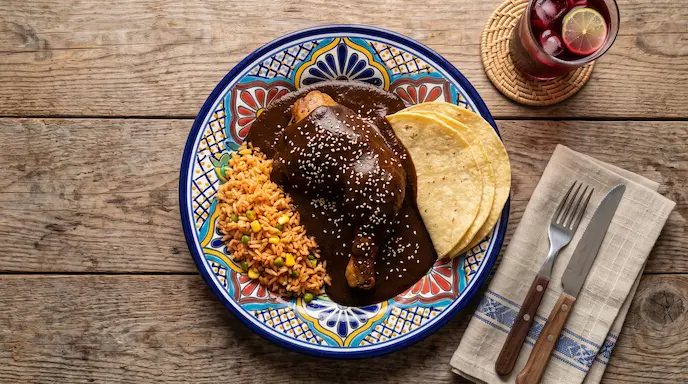
If you’re planning a trip to Mexico, mole is one of the dishes you’ll want to try at least once, and understanding what it actually is will help you order with confidence and appreciate what’s on your plate.
Is Mole a Spanish or Mexican Dish?
Mole is Mexican, not Spanish. The confusion is understandable, Spanish colonization did shape the dish, since ingredients like almonds and cinnamon arrived with the Spanish and were blended into Indigenous recipes. But mole’s roots, its base ingredients, and its cultural meaning are entirely Mexican. You won’t find mole on a traditional Spanish menu; it belongs to Mexico’s own culinary tradition.
The Origins of Mole
The word mole comes from the Nahuatl word mōlli, meaning “sauce” or “concoction.” Its roots go back to pre-Hispanic times, when Indigenous communities in what is now Mexico prepared sauces using chili peppers, seeds, and herbs. After the Spanish conquest, new ingredients, almonds, cinnamon, and bread, were folded in, turning mole into the layered dish it is today.
One of the most famous origin stories comes from Puebla, where nuns at the Santa Rosa convent are said to have created Mole Poblano in the 17th century to honor a visiting archbishop, combining Indigenous chilies with Old World spices and a touch of chocolate.
What’s in Mole? Main Ingredients
Recipes vary by region and family, but most moles share a few core building blocks:
- Chili peppers – ancho, pasilla, mulato, or guajillo, roasted or dried
- Spices – cinnamon, cloves, cumin, black pepper
- Seeds and nuts – pumpkin seeds, sesame seeds, peanuts, almonds
- Thickening agents – corn tortillas, bread, or plantains
- Sweet notes – raisins, sugar, or chocolate (especially in Mole Poblano)
The magic of mole is balance: smoky, sweet, spicy, and savory, blended into one velvety sauce that can take hours, sometimes an entire day, to prepare properly.
Regional Varieties of Mole (and Where to Try Them)
Mexico has dozens of mole varieties, and where you travel will shape which ones you get to taste:
- Mole Poblano (Puebla) — dark, rich, slightly sweet, made with chocolate and chilies. Traditionally served over turkey or chicken. Puebla is the place to try the “original.”
- Mole Negro (Oaxaca) — often called the “king of moles,” made with chocolate, chilhuacle negro chilies, and up to 30 ingredients. Oaxaca is considered the mole capital of Mexico, with entire markets dedicated to mole pastes.
- Mole Coloradito (Oaxaca) — reddish, lighter than Mole Negro, with tomatoes and a touch of sweetness.
- Mole Amarillo (Oaxaca) — bright yellow, lighter, often paired with vegetables or chicken.
- Mole Verde (central Mexico) — made with green herbs, pumpkin seeds, and tomatillos; fresh and herbal.
- Pipián — emphasizes pumpkin seeds, giving it a nutty, slightly thick texture.
If mole is high on your food-travel list, Oaxaca is the single best destination, it’s the only place in Mexico where you can realistically try five or more distinct mole varieties in one trip, often at the same market.
When You’ll See Mole in Mexico
Mole isn’t everyday food, it’s fiesta food, reserved for moments that matter:
- Weddings and baptisms — a symbol of abundance and unity
- Día de Muertos (Day of the Dead) — offered on altars (ofrendas) for loved ones who have passed
- Cinco de Mayo, especially in Puebla, where Mole Poblano takes center stage
- Christmas and New Year’s — a centerpiece of festive family meals
If your trip lines up with any of these dates, you’re in luck, it’s the easiest time to find mole made the traditional way, in large batches, at its best.
Frequently Asked Questions
Is mole spicy? Not usually intensely spicy, most moles are more about depth of flavor than heat. Mole Negro and Mole Poblano are typically mild to medium.
What does mole taste like? Complex and layered: smoky and earthy from the chilies, slightly sweet from chocolate or fruit, and savory from the spices, closer to a rich sauce than anything resembling Spanish or Tex-Mex food.
What’s the best mole for a first-timer? Start with Mole Poblano, it’s the most widely available and the easiest introduction to the dish.
Final Thoughts on Mole
Mole is more than a sauce, it’s a cultural bridge between Mexico’s Indigenous past and its colonial history, and one of the best reasons to plan a food-focused stop in Puebla or Oaxaca. If you’ve never tried it, start with Mole Poblano, then work your way through Oaxaca’s varieties if you get the chance, each one tells a different regional story.
One Comment