Mexico’s drink culture runs far deeper than tequila and margaritas. Every region has its own distilled spirits and fermented drinks, many tied to specific plants, traditions and centuries old techniques. Here’s what to try, and what makes each one distinct.
Mezcal
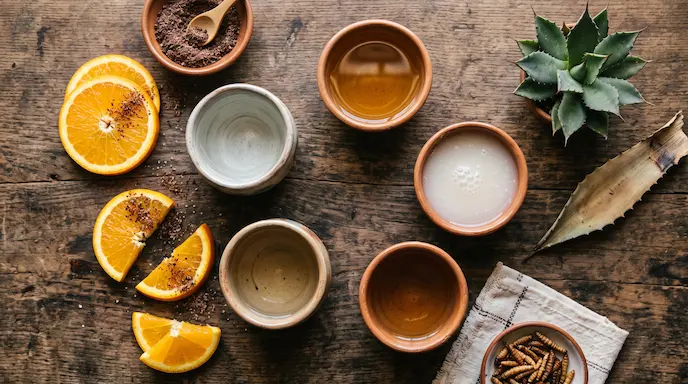
Mezcal comes from the maguey plant and has become one of Mexico’s most internationally celebrated spirits. Producers still make it almost entirely by hand, and its smoky, earthy flavor varies significantly depending on the region and the specific agave used. Pair it the traditional way, with orange slices, dried meat or Cotija cheese. Mezcal typically runs 45 to 50 percent alcohol, so treat it with respect. Oaxaca produces the largest share of Mexico’s mezcal and remains the best place to try it straight from small producers.
Tequila
Tequila needs little introduction. Distillers extract it from the blue agave plant, almost exclusively around the town of Tequila in Jalisco, and you’ll find it in every bar, restaurant and nightclub in the country. Order it as a Margarita, a Paloma, a Charro Negro, or simply with lime and salt.
Charanda
Charanda comes from Michoacán, distilled from sugarcane rather than agave. Its name comes from the Purépecha word for “red earth,” and its flavor sits closer to rum than to tequila or mezcal. Producers still make it through an artisanal process, and bartenders across the region use it in cocktails.
Sotol
Sotol comes from northern Mexico and uses a wild desert plant related to agave, rather than cultivated maguey. It carries a strong, earthy, woody flavor, and Indigenous communities in the region traditionally used it in ceremonial contexts. Sotol has gained a growing following among spirit enthusiasts looking for something distinct from mezcal.
Pulque
Pulque predates the Spanish conquest and was once used ceremonially for its mildly intoxicating, energizing properties. Producers make it by fermenting the sap of the maguey plant, using a technique that hasn’t changed much in centuries. You can still find it today in some of Mexico City’s most traditional pulquerías.
Tepache
Tepache offers the most refreshing, lowest alcohol option on this list. Traditionally made from corn, most versions today use pineapple, apple or orange, fermenting the fruit’s pulp, peel and juice with water and raw sugarcane for a few days. Alcohol content stays low but rises with longer fermentation. You’ll typically find it in cantinas and local markets, often served over ice from large clay jars.
Frequently Asked Questions
What’s the difference between mezcal and tequila? Tequila comes only from blue agave, mainly in Jalisco, and follows a more standardized production process. Mezcal can come from dozens of agave varieties across several states, and producers still make most of it by hand, giving it a wider range of flavors, usually smokier than tequila.
Where can I try pulque in Mexico City? Traditional pulquerías, some over a century old, still operate around the historic center and in neighborhoods like La Merced. Look for a venue with a steady local crowd, a good sign of quality and freshness.
Is mezcal stronger than tequila? Both typically run in a similar alcohol range, 35 to 55 percent depending on the brand. Mezcal often feels stronger because of its intense smoky flavor, not necessarily a higher alcohol content.
Final Thoughts
From ceremonial pulque to the smoky depth of mezcal, Mexico’s drinks tell as much of a cultural story as its food. Try to taste them where they’re made, Oaxaca for mezcal, Michoacán for charanda, Mexico City for pulque, rather than settling for whatever’s on hand elsewhere. And always drink in moderation.