
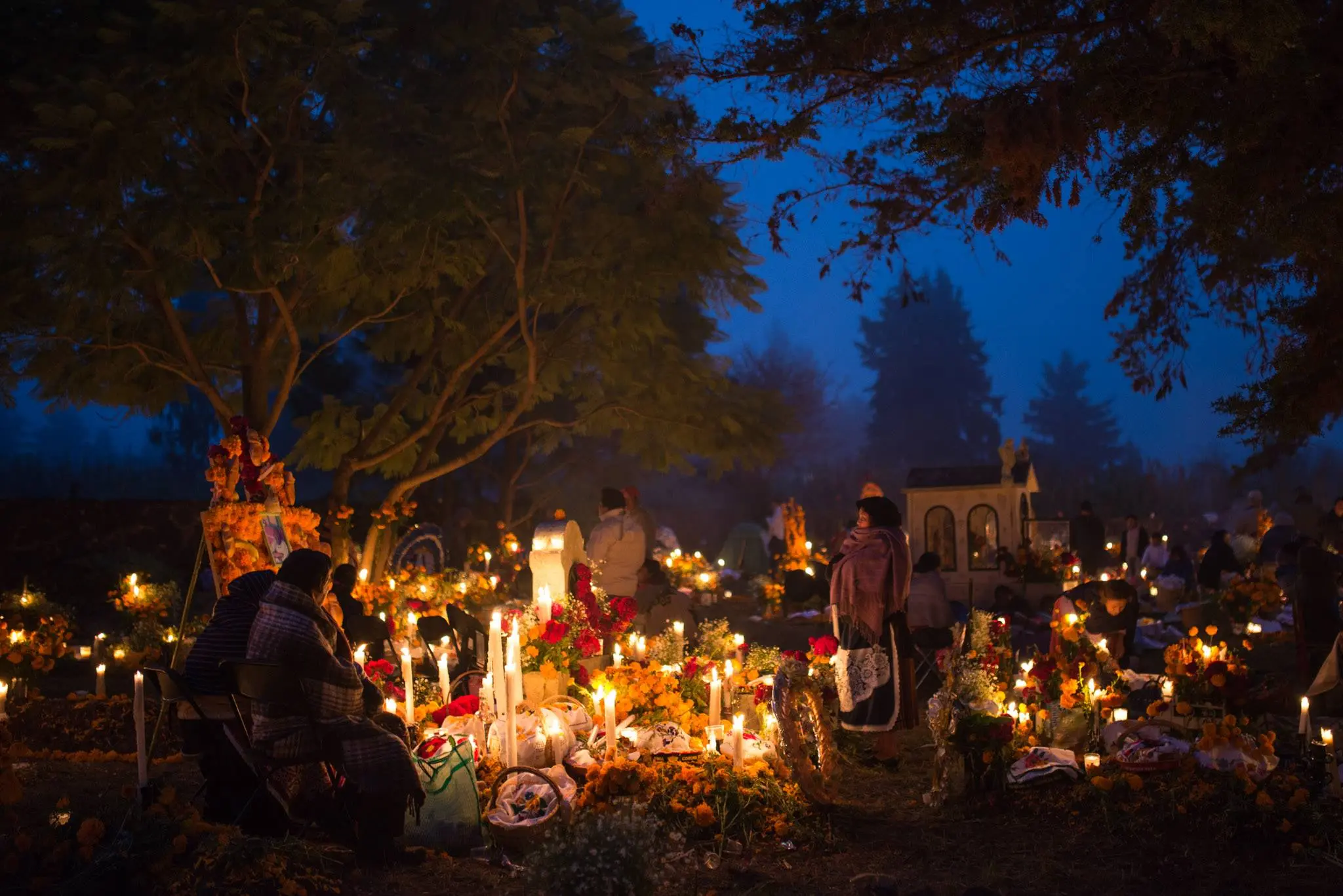
Day of the dead, celebration of life
Día de Muertos, or Day of the Dead, is one of Mexico’s most recognized traditions, and one of the most misunderstood by visitors. It’s not a sad occasion, and it’s not the Mexican version of Halloween. It’s a celebration built around welcoming the souls of loved ones back for a night, with color, food and a surprising amount of humor.
When Is Day of the Dead?
Day of the Dead takes place every year on November 1st and 2nd. November 1st is traditionally dedicated to children who have passed away, while November 2nd honors adults. In many towns, celebrations actually build up over several days leading to November 2nd.
The Origins of the Tradition
For pre-Hispanic cultures in what is now Mexico, death wasn’t an ending but another stage of life. Rather than mourning in silence, these cultures developed rituals that let the living stay connected to the souls of those who had passed. That worldview, blended later with Catholic All Saints’ and All Souls’ Days brought by Spanish colonization, shaped the tradition as it’s celebrated today. UNESCO recognizes Day of the Dead as part of the Intangible Cultural Heritage of Humanity.
The Ofrenda: Mexico’s Day of the Dead Altar
The ofrenda, or altar, is built to invite a loved one’s soul back for the night. Each element has a purpose:
- A photo of the person being honored
- Candles, to light the soul’s path
- Marigold flowers (cempasúchil), to attract the soul with their color and scent
- Salt, to purify
- Copal incense
- Papel picado (cut paper banners), symbolizing air
- Fruit, symbolizing earth
- Food, drinks, sugar skulls and bread, representing what the person loved in life
- Personal belongings of the deceased
Families often spend days building and decorating these altars, both at home and, in some regions, directly at the cemetery.
Cemetery Vigils
On the night of November 2nd, families gather at cemeteries to clean and decorate graves with flowers and candles, bring the deceased’s favorite food and drink, and keep an overnight vigil, hoping their loved one returns for just that night. In towns where this tradition runs deep, cemeteries lit entirely by candlelight are one of the most striking sights in the country.
La Catrina and Mexican Humor
Mexicans have a particular way of facing death: with humor rather than fear. This gave rise to La Catrina, an elegant skeleton dressed as high society, a reminder that death comes for everyone regardless of status. It also produced calaveritas literarias, short, funny poems written about a living person as if they had already died, usually poking fun at their habits or personality.
Best Places to Experience Day of the Dead in Mexico
Celebrations vary widely by region. Some of the most well known places to experience it include:
- Lake Pátzcuaro, Michoacán — Candlelit boats crossing to the island of Janitzio for an overnight cemetery vigil, one of the most photographed Day of the Dead scenes in the country.
- Mixquic and Xochimilco, Mexico City — Historic cemetery vigils just outside the city center, easily reachable if you’re based in CDMX.
- Huaquechula, Puebla — Known for elaborate, multi tiered white altars built for those who died in the past year.
- Huasteca Potosina — Celebrations known as Xantolo, blending Indigenous Huastec traditions with more theatrical elements, including costumed dancers.
- San Miguel de Allende, Guanajuato — Home to an annual Skull Festival (La Calaca Festival) with parades and public art installations.
If this is the main reason for your trip, Michoacán and Mexico City are the most accessible starting points for first time visitors, while Huasteca Potosina and Huaquechula reward travelers looking for something further off the typical route.
Frequently Asked Questions
Is Day of the Dead the same as Halloween? No. While both fall around the same time of year, Day of the Dead is about welcoming deceased loved ones back for a joyful reunion, not about fear or costumes for their own sake. The tone, symbolism and rituals are entirely different.
Do tourists need an invitation to visit cemeteries during Day of the Dead? In most well known sites like Pátzcuaro or Mixquic, respectful visitors are welcome to observe. It’s important to stay quiet, avoid using flash photography near families, and remember you’re witnessing a private, meaningful moment for local families.
What should I bring if I want to build my own small altar? At minimum, a photo, some marigold flowers and a candle. Most of the symbolic items are inexpensive and easy to find in local markets in the weeks leading up to November 1st.
Final Thoughts
Day of the Dead is less a spectacle and more an invitation into how Mexico relates to memory, family and mortality. Whether you experience it in a busy cemetery in Michoacán or through a small home altar in Mexico City, it’s one of the most meaningful traditions you can witness firsthand in the country.
You can check the official UNESCO listing for Day of the Dead for more on its cultural significance. If Frida Kahlo is also on your Mexico City itinerary, her family altar tradition at Casa Azul is worth seeing around this time of year as well.