
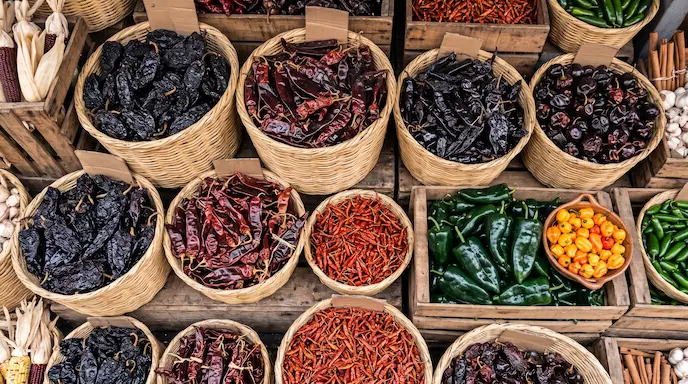
Most visitors arrive in Mexico expecting everything to be spicy. Then they discover that the chile in their mole barely stings, the green salsa at the taquería is the hottest thing on the table, and the same chile has two different names depending on whether it’s fresh or dried.
I grew up in Michoacán, where every kitchen has a molcajete and every table has at least one salsa. This guide isn’t a cookbook. It’s what I’d tell a friend before their first trip: the types of Mexican chiles (or Mexican peppers, as many people call them in English) you’ll actually see on menus and in markets, how hot they are, and how to order without ruining your dinner.
The short answer
The most common Mexican chiles are the poblano (mild, called ancho when dried), the jalapeño (medium, called chipotle when smoked and dried), the serrano (hot, used in fresh salsas), the guajillo (dried, mild to medium), the chile de árbol (dried, hot) and the habanero (very hot, from the Yucatán Peninsula). Many Mexican dishes use dried chiles for flavor and color rather than heat, so the spiciest thing on your table is usually the salsa.
Why Mexican Chiles Are Confusing (and Why It’s Easier Than It Looks)
Three things trip up almost every visitor:
- One chile, two names. In Mexico, many chiles change name when they’re dried. A fresh poblano becomes an ancho; a smoked jalapeño becomes a chipotle.
- Heat isn’t the point. Dried chiles like ancho, guajillo and pasilla are used for color, depth and a fruity or smoky taste. Moles and adobos are rich, not necessarily spicy.
- The same name changes by region. A chile called one thing in Mexico City can have a completely different name in Michoacán or Chiapas.
Here’s a quick way to see where each chile sits on the heat scale:
Fresh Chiles You’ll See in Mexico
Poblano
Large, dark green and mild. It’s the chile behind chiles rellenos (stuffed and fried), rajas con crema (roasted strips in cream) and chiles en nogada, Puebla’s famous dish served in late summer with walnut sauce and pomegranate. If you want to plan a trip around that season, see the best time to visit Mexico. If you’re nervous about heat, poblano dishes are your safe zone, although now and then you’ll get a surprisingly hot one.
Jalapeño
The chile most visitors already know, but in Mexico you’ll mostly see it pickled (en escabeche, with carrots and onion) on the side of tortas and tacos, or fresh in salsas. Medium heat.
Serrano
Thinner and hotter than a jalapeño, and the backbone of many fresh salsas, including pico de gallo (called salsa mexicana in much of Mexico) and many green salsas. When a taquería salsa is bright green and fresh, there’s a good chance serranos are in it.
Habanero
Small, lantern-shaped and very hot, with a fruity, floral smell. It’s the chile of the Yucatán Peninsula, where it goes into salsas served with cochinita pibil and other regional dishes. If you’re staying in Cancún or anywhere on the Riviera Maya, this is the salsa you’ll meet first. The habanero from the Yucatán Peninsula has a protected designation of origin since 2010, like tequila or mezcal. Respect it.
Manzano (chile perón in Michoacán)
This one is personal. The manzano is a round, apple-shaped chile, usually yellow, orange or red, and you can recognize it instantly by its black seeds, unlike almost every other chile. In Michoacán we call it chile perón, and agricultural researchers in Michoacán note it’s one of the main chiles grown in the state. It’s juicy, crunchy and hotter than it looks. In Morelia you’ll find it chopped into fresh salsas and served with tacos and grilled meat. If you’re traveling there, our Michoacán travel guide covers the rest of the state.
Chile de agua and other regional chiles
Every region has its own. In Oaxaca, look for chile de agua, a pale green chile often roasted and served in salsas or stuffed. In the north, you’ll find tiny wild chiltepín, so hot it’s used a few pieces at a time.
Dried Chiles (and Their Fresh Names)
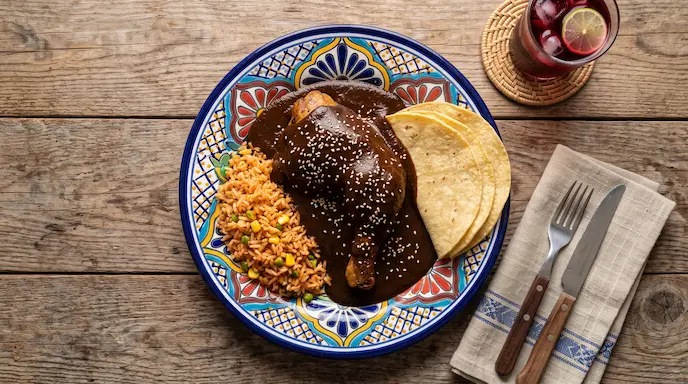
Dried chiles are where Mexican cooking gets its depth. They’re toasted, soaked and blended into salsas, adobos, pozole broths and moles. If you want to understand how dozens of them come together in one sauce, read our guide to mole.
The other dried chiles worth knowing:
- Chile de árbol: thin, bright red and hot. It’s in many red taquería salsas and in salsa macha, a crunchy chile oil from Veracruz that’s now everywhere.
- Cascabel: small and round, it rattles when you shake it (cascabel means rattle). Nutty and mild.
- Mulato: a darker relative of the ancho, with a chocolatey taste, often used in moles.
- Morita: a type of smoked jalapeño, smaller and fruitier than the classic chipotle. You’ll often find chipotles in adobo, canned in a tangy red sauce.
Regional Chiles: What to Look For Where You Travel
Habanero salsas next to cochinita pibil and panuchos. Ask for it on the side.
The home of moles. Smoky Oaxacan pasilla and rare chilhuacles give them their depth.
Chiles en nogada in late summer and some of the country’s most famous moles.
Fresh perón salsas, plus dried chiles in pozole and regional dishes.
Smoked chiles and crunchy chile oils, plus jalapeños from the state that gave them their name.
Tiny wild chiltepín crushed over soups and beans. Use one at a time.
For more on the food, markets and day trips in the south, see our Oaxaca travel guide.
How to Order Food in Mexico Without Burning Your Mouth
Here’s the local logic:
- Most dishes arrive mild; the heat is on the table. Salsas are served on the side so everyone adds their own. Taste a drop on a chip or tortilla first.
- Color doesn’t tell you the heat. Green salsa is not automatically milder than red. At many taquerías, the creamy-looking green one is the hottest.
- Pickled jalapeños and whole roasted chiles (chiles toreados) on the plate are for those who want them. Nobody expects you to eat them.
- “No pica” is relative. When a Mexican tells you something isn’t spicy, they mean it isn’t spicy for them.
🗣️ Chile phrases to save on your phone
If you overdo it
- Dairy helps more than water. Crema, cheese or a glass of milk or horchata calms the burn.
- Tortillas and rice soak up the heat.
- Beer and water spread it around more than they cool it, although that won’t stop anyone from ordering one. For what else to drink with spicy food, see our guide to Mexican drinks.
- Wash your hands after touching cut chiles, and don’t touch your eyes. Habanero oil lasts.
Where to Try (and Buy) Mexican Chiles
- Markets: every town has one. In Mexico City, the Mercado de Jamaica and Mercado de la Merced have huge dried chile stalls; in Oaxaca City, the Mercado 20 de Noviembre and Benito Juárez markets are right next to each other. See our Mexico City travel guide for the neighborhoods around them.
- Taquerías: the best place to compare salsas side by side.
- Cooking classes: you’ll toast, soak and blend dried chiles yourself, and finally understand why moles take all day.
Can you bring chiles home?
Dried chiles are easy to pack and are among the best food souvenirs from Mexico. Rules on bringing food into your home country vary (fresh produce is usually restricted, dried and packaged products often are not), so check your country’s customs rules and always declare food when asked.
Frequently Asked Questions
What are the most common chiles in Mexico?
The most common are the poblano, jalapeño and serrano when fresh, and the ancho, guajillo, pasilla, chipotle and chile de árbol when dried. In the Yucatán Peninsula, the habanero is the everyday chile.
What is the mildest Mexican chile?
The poblano and its dried form, the ancho, are among the mildest. Guajillo and pasilla are also mild to medium and are used more for flavor and color than heat.
What is the hottest chile in Mexico?
The habanero is the hottest chile you’re likely to find in everyday Mexican food. Small wild chiles like the chiltepín can also be extremely hot.
Why do Mexican chiles have different names when dried?
In Mexico, a chile’s dried form is treated as a different ingredient because drying changes its flavor, color and use. That’s why a fresh poblano becomes an ancho, a chilaca becomes a pasilla, a mirasol becomes a guajillo and a smoked, dried jalapeño becomes a chipotle.
Is all Mexican food spicy?
No. Many Mexican dishes are mild, and the heat usually comes from salsas served on the side. Dried chiles in moles and adobos add depth and color more than heat. Ask “¿pica?” (is it spicy?) when in doubt.
What chile is used in chiles en nogada?
Chiles en nogada use the poblano chile, roasted and stuffed with a meat and fruit filling, then covered in a walnut sauce and pomegranate seeds. It’s a seasonal dish from Puebla, usually served from late summer into early fall.
Final Thoughts
You don’t need to love spicy food to love Mexican food. Once you know that the heat lives in the salsas and the flavor lives in the dried chiles, menus get a lot less scary.
My advice: try one new chile in every region you visit, ask “¿pica?” without shame, and bring a bag of anchos and guajillos home in your suitcase. Heading to Mexico for the first time? Read our tips for first-time visitors before you go.
One Comment